LEAVES – 2025 –
Project Code: 2025-1-HU01-ESC51-VTJ-000347539
Group Volunteering Project

Date: 1–21 September 2025
Location: Cold Hill Shelter
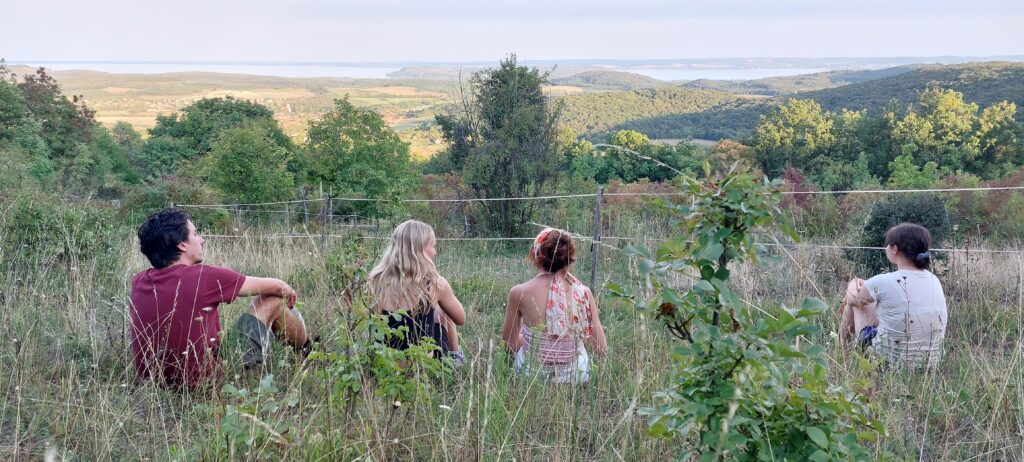
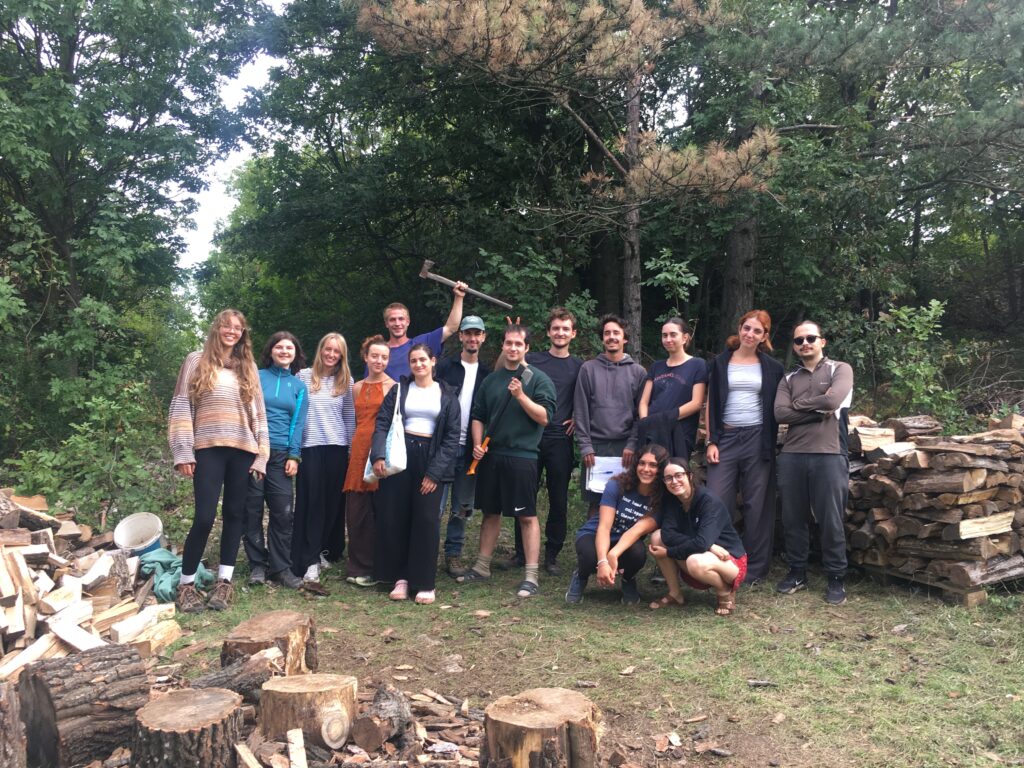
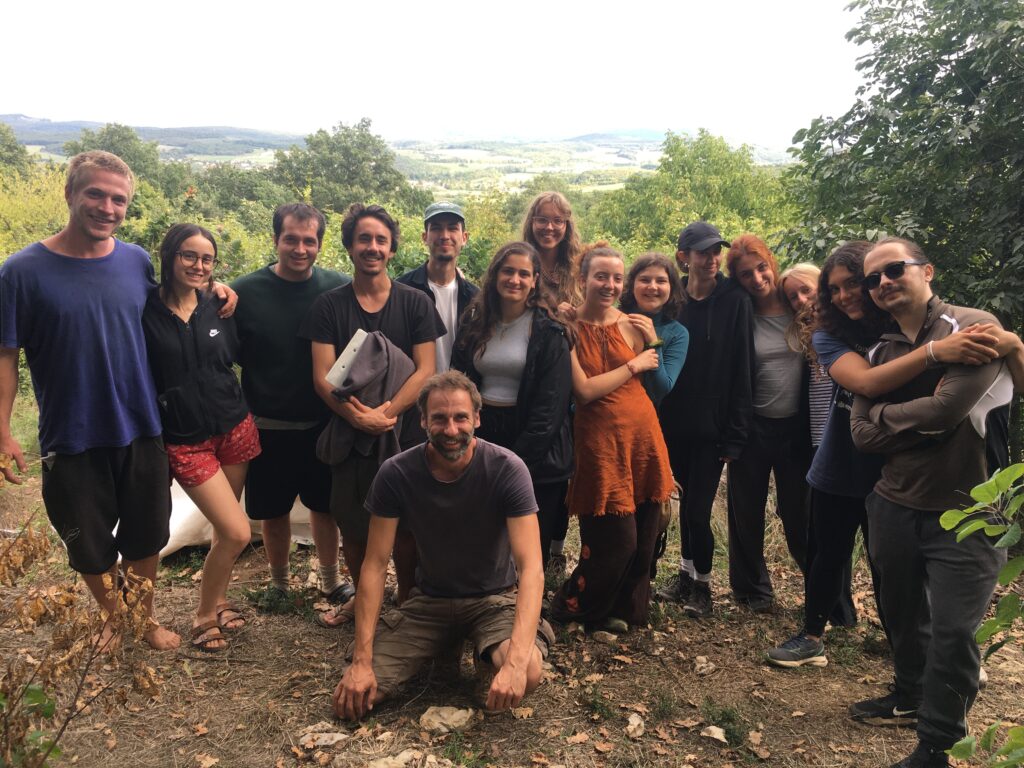
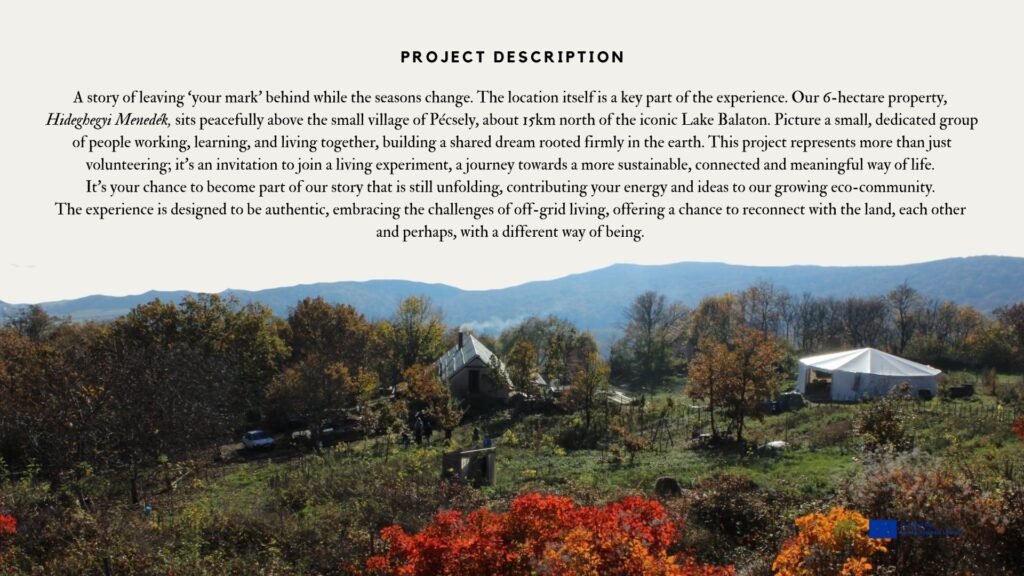
Fifteen enthusiastic and motivated young people aged 18–30 came to us from nine countries — Germany, France, Syria, Estonia, Portugal, Poland, the Netherlands, Italy, and Hungary — all sharing an interest in eco-conscious and sustainable rural living. We chose autumn for the camp because the weather is ideal for outdoor physical activities at this time of year.
What did the volunteers do and learn?
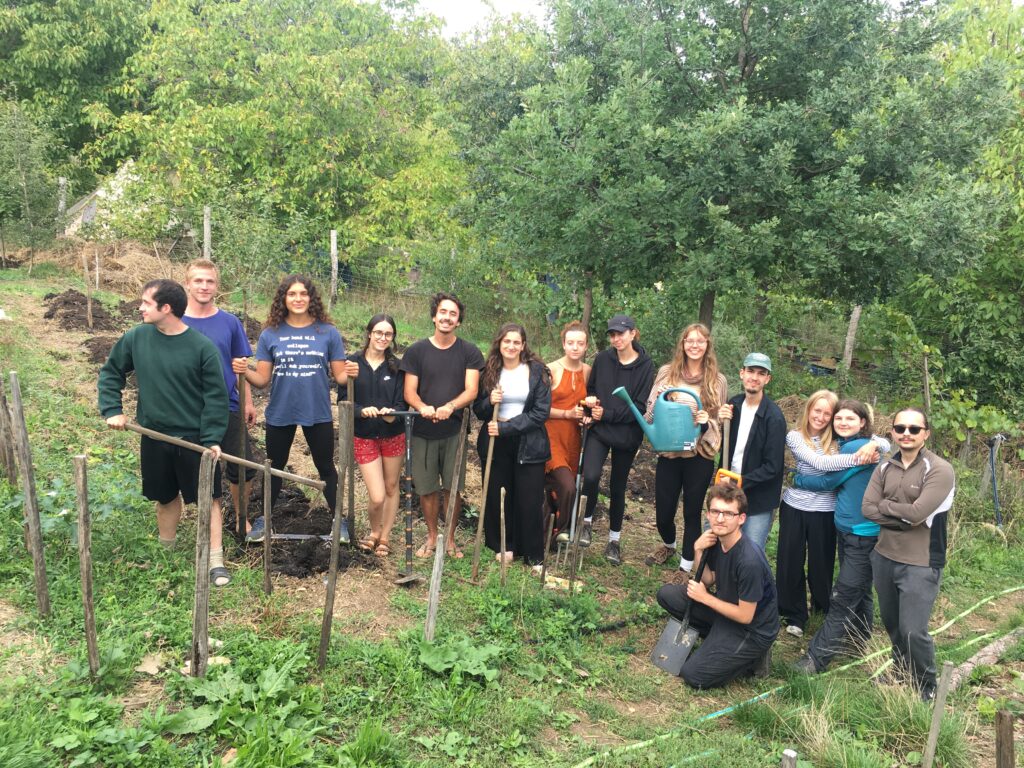
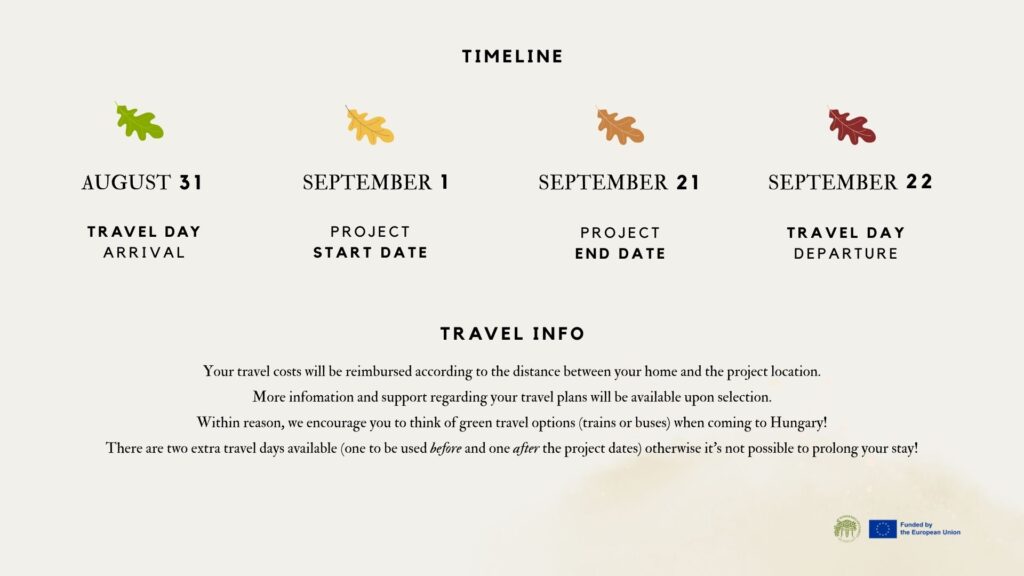
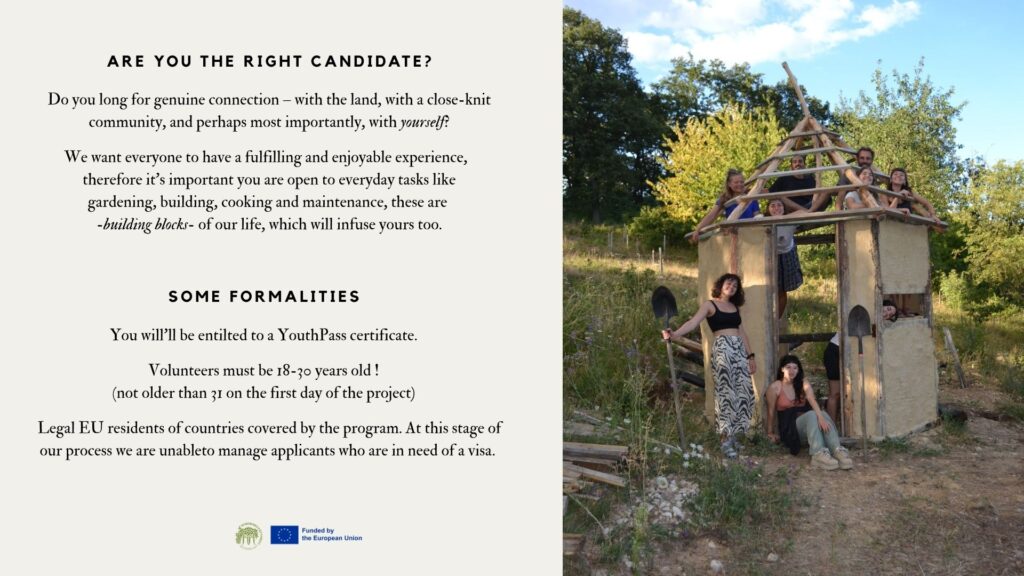
- They took part in the daily life of an off-grid ecological farm and living space, involving themselves in kitchen and gardening work while experiencing the responsibilities and opportunities of a self-sufficient rural lifestyle.
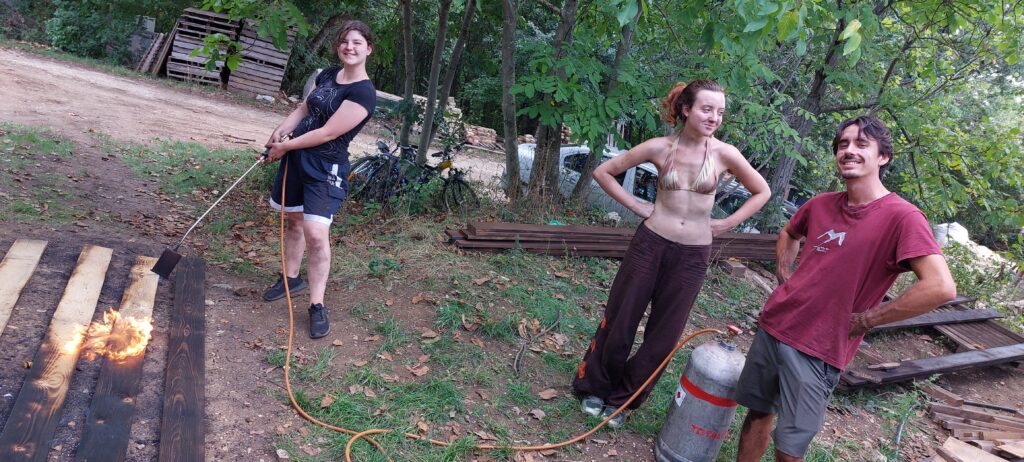
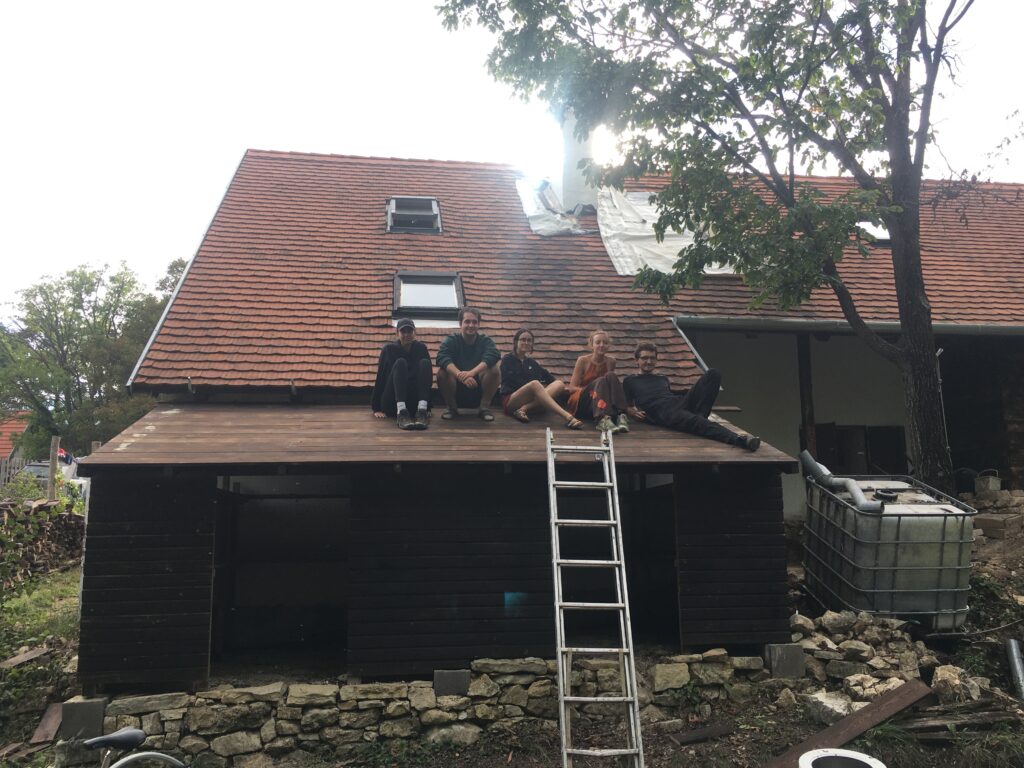
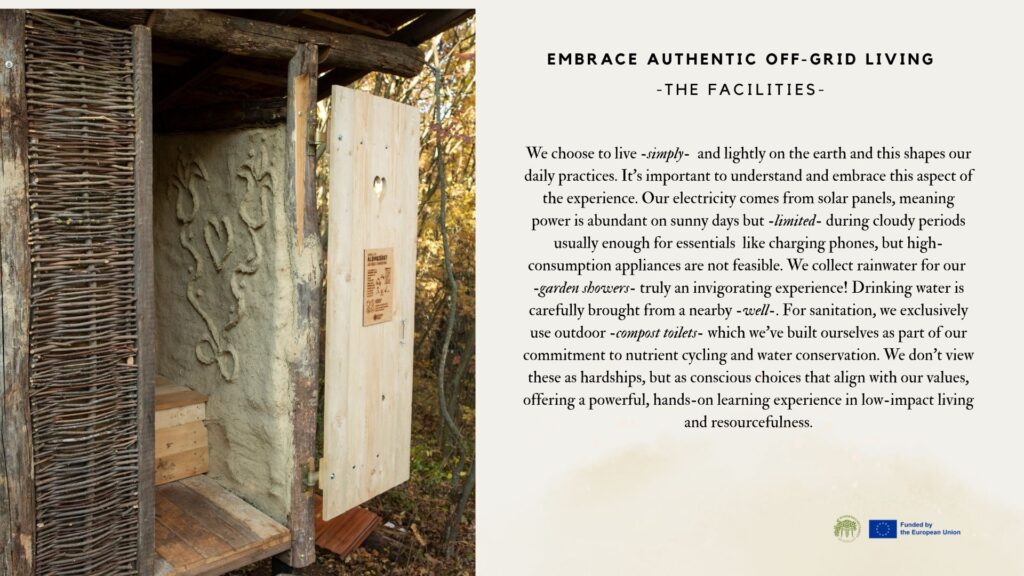
- They learned natural building methods through practical work — constructing a lean-to, a mortise-and-tenon wooden frame structure, a compost toilet, and a woven wattle wall — while developing hands-on building and tool-use skills.
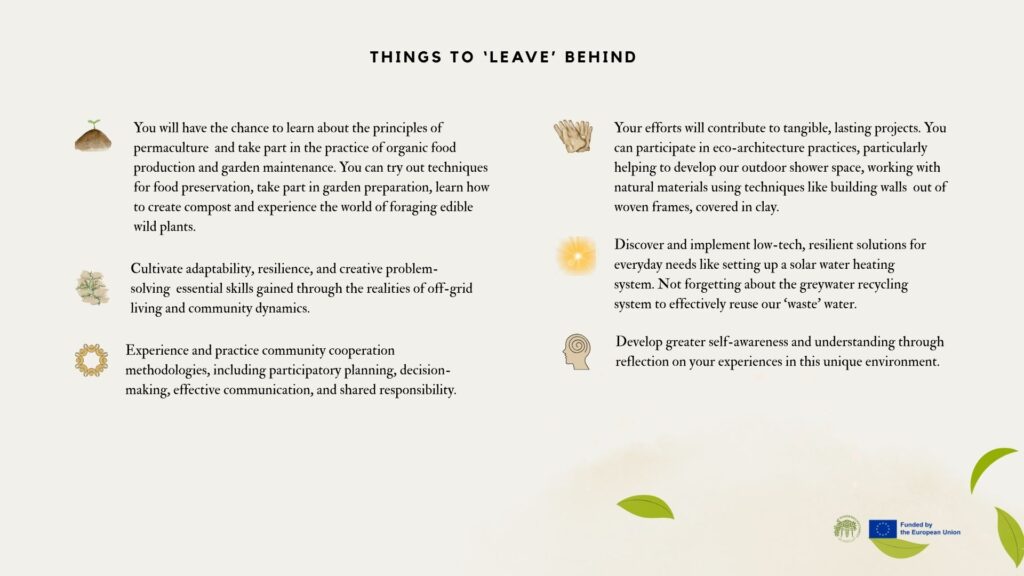
- They gained insights into ecological farming and permaculture principles, acquiring practical knowledge in areas such as composting, greywater management, rainwater harvesting, off-grid solar power systems, and zero-waste household practices.
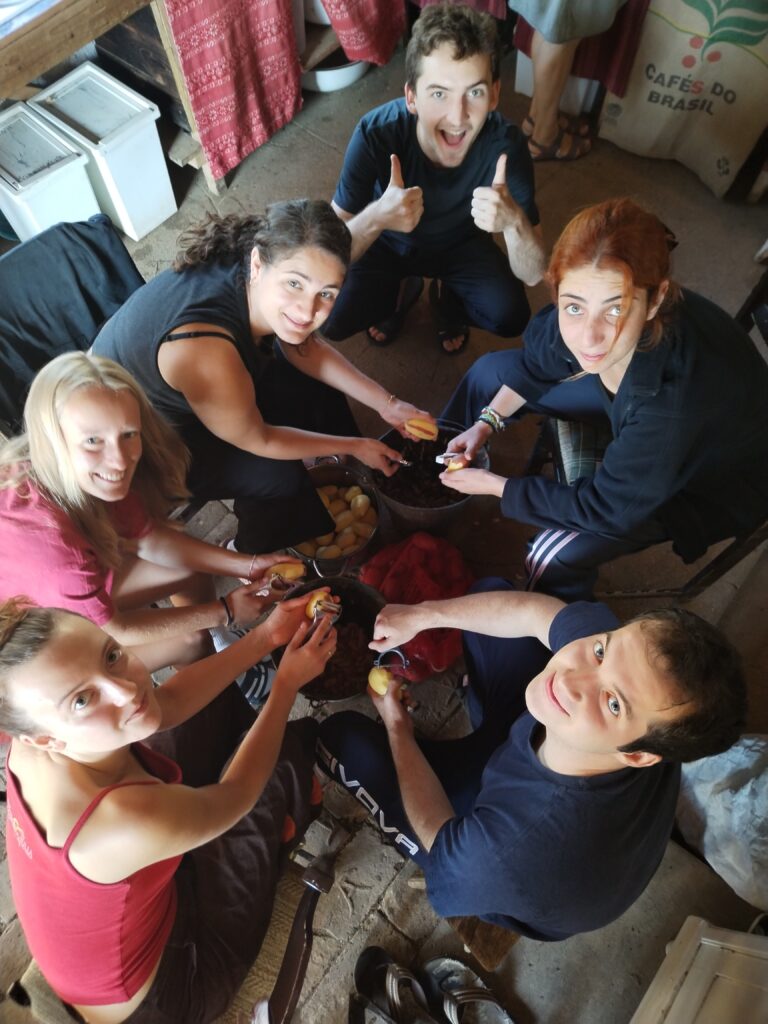
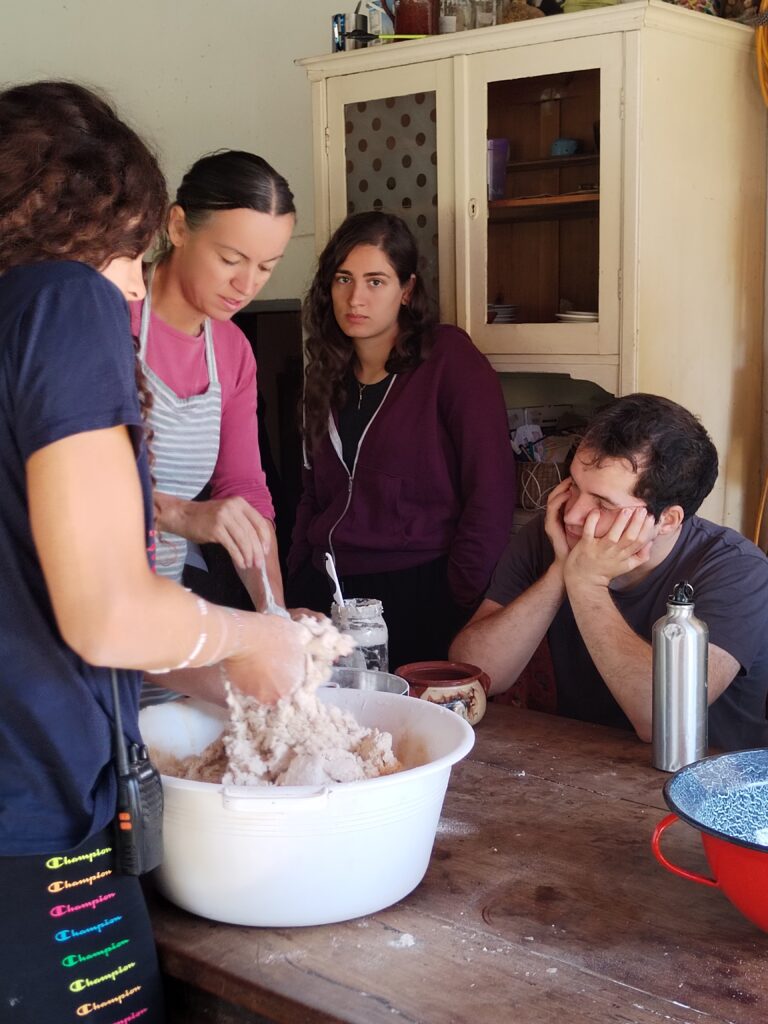
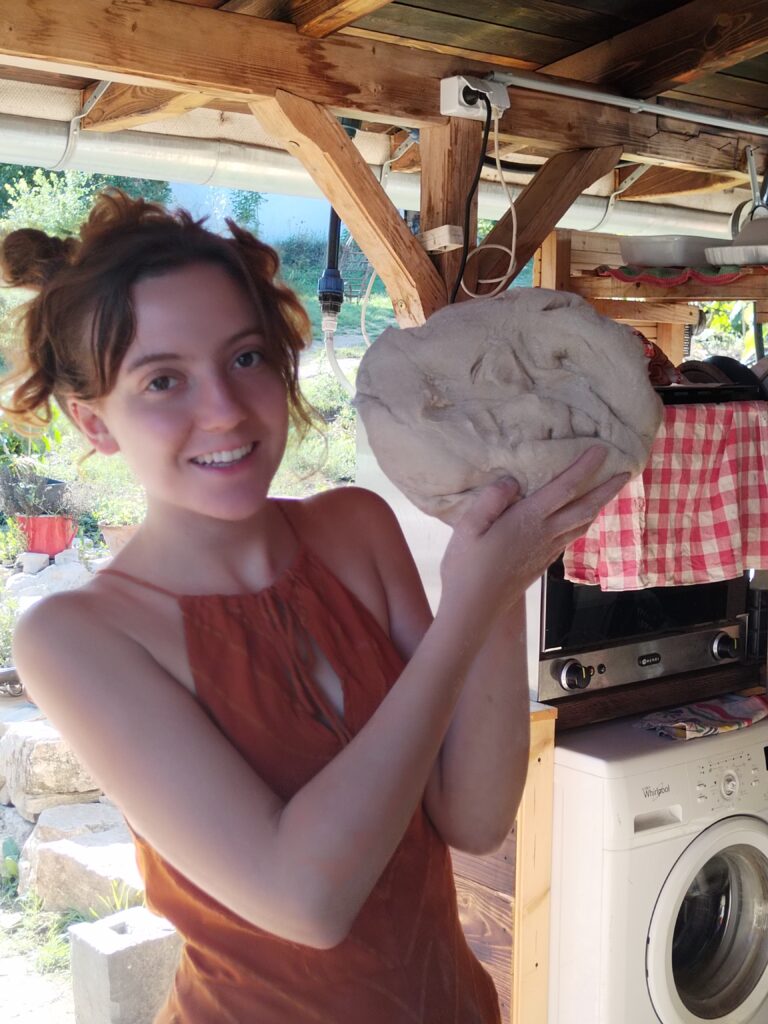
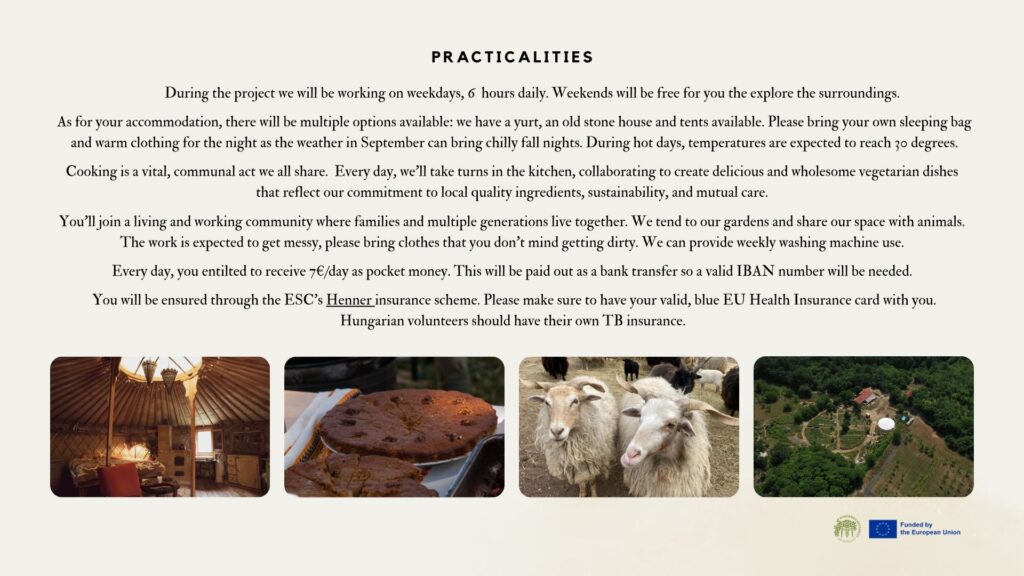
- They cooked with local and seasonal ingredients, baked sourdough bread, and practiced fermentation techniques.
- They organized the distribution of daily tasks — gardening, building, and cooking — learning collaboration and how to discuss and address questions as a team.
How did they develop?
- Their independence, sense of responsibility, and teamwork skills grew stronger.
- Their practical, problem-solving, and manual skills improved.
- Their environmental awareness and sensitivity toward sustainable resource management deepened.
- They became more confident, enhanced their self-knowledge, and fostered a deeper sense of community connection.
A typical day
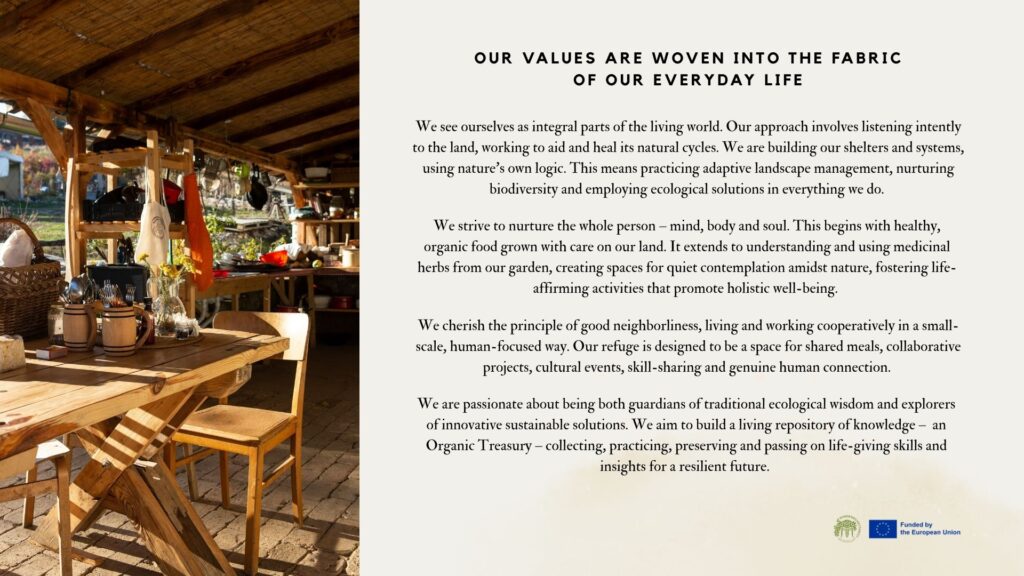
- A typical day began with half an hour of quiet reflection or meditation, followed by a communal breakfast prepared by members of the small community.
- Then came the morning briefing, where Bali, the project’s professional leader, presented the possible daily tasks and introduced the theoretical background for new work processes.
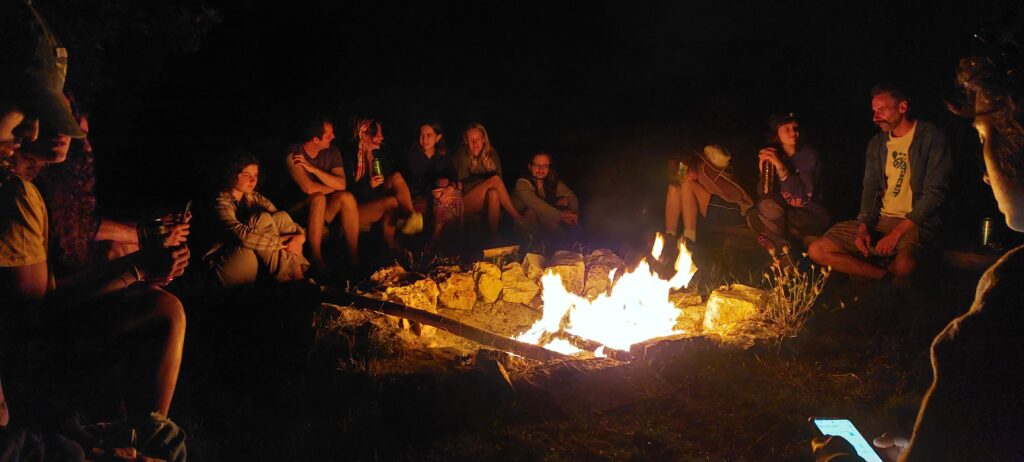
- Working hours were divided into two 3-hour sessions, with lunch and rest in between. In the evenings, after dinner, participants held a reflection circle to share feedback, experiences, and impressions of the day’s work.
- The hosts were Regi and Bali; from the local community, Gergő and Timi joined the team. And one day, the group even had the opportunity to enjoy a sauna by the spring, thanks to our neighbor, Kitty.